How to Read Skincare Labels: The Indian Consumer’s Guide to Ingredient Lists

You’re standing in a pharmacy or scrolling online, trying to choose between two similar-looking products. The ingredient lists are long, the marketing claims are bold, and the prices are wildly different. Knowing how to read a skincare label gives you a superpower — the ability to cut through marketing and evaluate products on their actual merits. Here’s your guide.
How Ingredient Lists Work
By international regulation, ingredients are listed in descending order of concentration — highest percentage first, lowest last. The first 5–6 ingredients make up the vast majority (often 80–90%) of the product. Ingredients listed after the 1% threshold (typically starting from preservatives) are present in very small amounts.
This means: if your favourite active ingredient is listed 15th on a label, it’s probably present at less than 1% — likely too low to have meaningful effect.
Key Ingredients to Look For
Niacinamide: Should appear in the top 5–8 ingredients for effective concentration. Effective at 2–5%.
Hyaluronic Acid (Sodium Hyaluronate): Even small concentrations work — 0.1% is effective. Can appear lower on the list and still be functional.
Ceramides: Look for multiple types — Ceramide NP, AP, EOP together are more effective than a single ceramide.
3-O-Ethyl Ascorbic Acid: The stabilised form of Vitamin C. More effective than plain Ascorbic Acid in most formulations.
Red Flags to Watch For
- Fragrance (Parfum): The #1 cause of skin sensitivity reactions. In leave-on products especially, fragrance adds no benefit and significant risk.
- Alcohol denat. high on the list: Drying and irritating. Fine as a last-few ingredients, problematic if it appears in the top 5.
- Comedogenic oils in acne-prone formulas: Coconut oil, cocoa butter, isopropyl myristate — clog pores for most skin types.
- Vague “natural extract” claims: “Rose extract” in the last 3 ingredients is present at trace amounts — primarily marketing.
What “Non-Comedogenic” Actually Means
Non-comedogenic means the product is formulated without ingredients known to clog pores. It’s not a regulated term — brands can use it without independent verification. But it’s still a useful signal for oily and acne-prone skin when choosing between options.
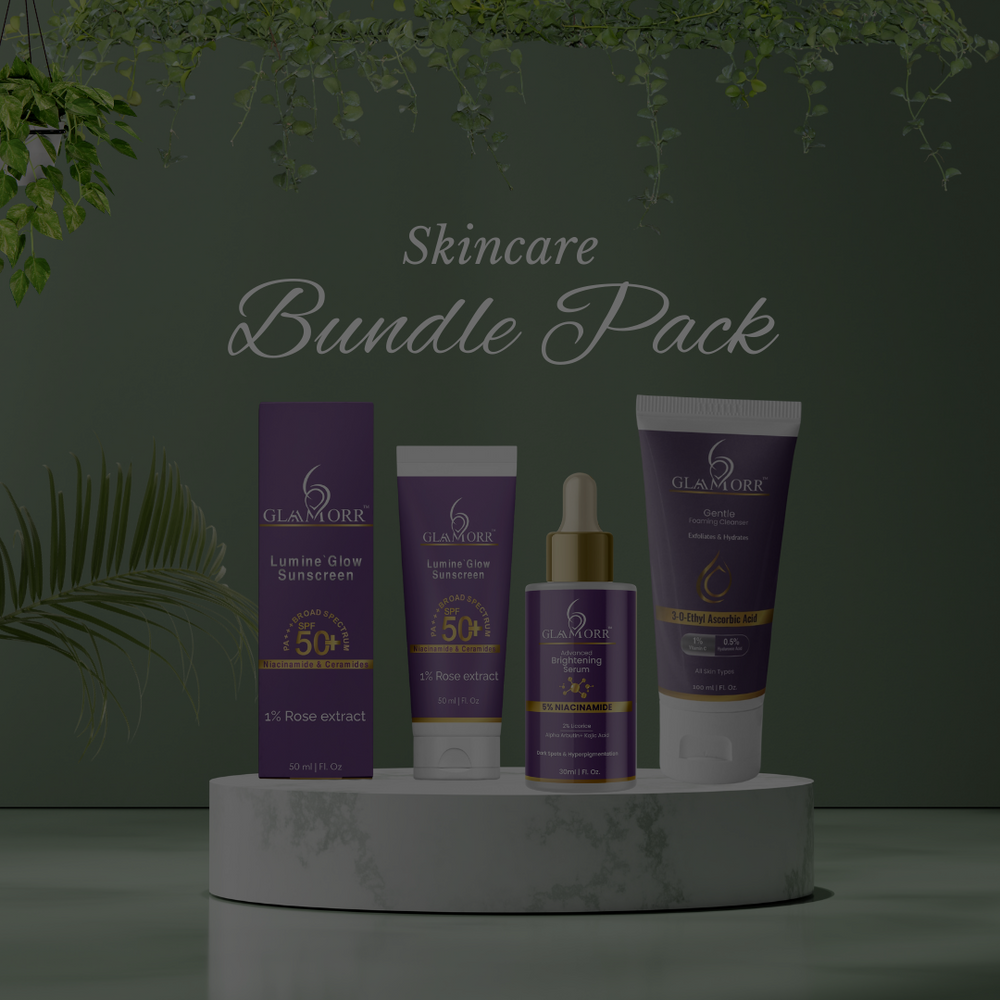
Glaamorr products lead with active ingredients at effective concentrations — what you see on the label is what your skin actually gets.
Shop at glaamorr.com — Use GLAMM10 for 10% off