Melasma in Indian Women: Causes, Treatment and What Actually Works

Melasma is one of the most common and stubborn skin conditions affecting Indian women — characterised by patches of brown or grey-brown pigmentation, typically on the cheeks, forehead, upper lip, and chin. It affects an estimated 40% of Indian women at some point in their lives, yet it’s widely misunderstood and frequently mistreated.
What Causes Melasma?
Melasma is triggered by a combination of factors — primarily hormones and UV exposure. It’s particularly common in women taking oral contraceptives, during pregnancy (called “chloasma” or the mask of pregnancy), and around perimenopause. The hormonal changes stimulate melanocytes to produce excess melanin, and UV exposure dramatically worsens and maintains the condition.
India’s high UV intensity combined with the hormonal profiles of Indian women makes melasma exceptionally prevalent here compared to Western countries.
Why Melasma Is Stubborn
Unlike regular sun tan or post-acne marks, melasma involves deep dermal pigmentation — not just surface level. This is why it doesn’t respond to the same treatments as regular dark spots and why it can come back even after successful treatment if UV protection is not maintained religiously.
The Evidence-Based Treatment Approach
SPF 50 PA+++ Daily — Non-Negotiable: Without daily sun protection, no treatment works for melasma. UV exposure overrides every brightening ingredient. This is step zero — before anything else.
Niacinamide (5%): Reduces melanin transfer and visibly lightens existing patches over 8–12 weeks. One of the gentlest and most consistent performers for melasma.
Alpha Arbutin: Inhibits tyrosinase activity, reducing melanin production in affected areas. Works synergistically with Niacinamide.
Licorice Extract: Contains glabridin, one of the most potent natural melanin inhibitors. Particularly effective for the grey-brown type of melasma common in Indian skin.
What to Avoid
Heat worsens melasma — not just UV but also heat from cooking, saunas, or hot showers on the face. Hormonal triggers: if melasma coincides with contraceptive use, consult your gynaecologist. Harsh scrubs and chemical peels without medical supervision can worsen melasma by causing inflammation.

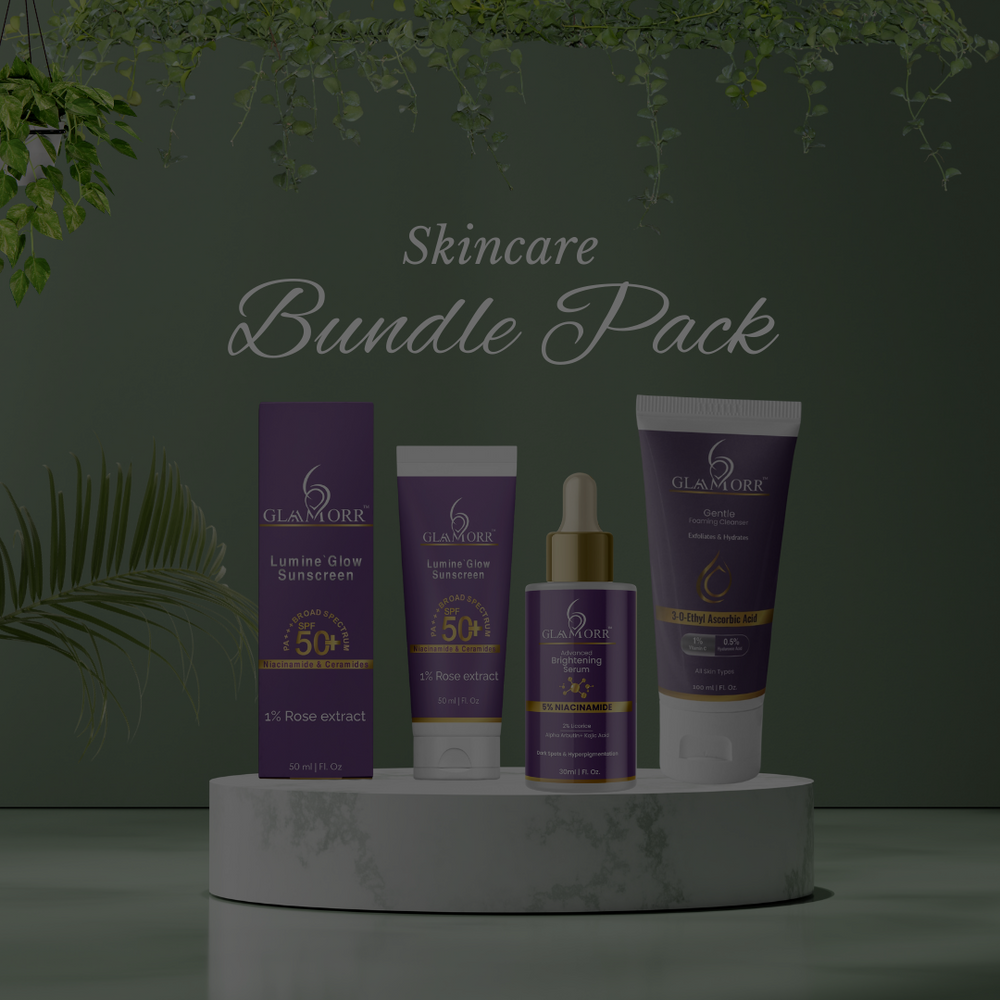
Glaamorr Brightening Serum
5% Niacinamide + Alpha Arbutin + Kojic Acid + 2% Licorice — four melasma-targeting ingredients in one formula
Shop Now — Use GLAMM10 for 10% off