5 Viral Indian Skincare Myths on Social Media (And What the Science Actually Says)

Instagram reels, YouTube skincare gurus, and influencer reviews have transformed how Indians discover skincare. While social media has democratised access to information, it’s also the most efficient distribution channel for skincare misinformation ever created. Here are the most viral Indian skincare myths circulating right now — and the truth behind each one.
Myth 1: “Natural = Safe, Chemical = Harmful”
This is the most pervasive myth in Indian skincare. Everything is a chemical — water is a chemical, aloe vera contains chemicals, lemon juice is a highly acidic chemical. “Natural” doesn’t mean safe (arsenic is natural; lemon juice on skin causes chemical burns) and “chemical” doesn’t mean harmful. What matters is the concentration, formulation, and how a specific ingredient interacts with your specific skin.
Myth 2: “More Expensive = Better Results”
The correlation between price and efficacy in skincare is weak to nonexistent. The active ingredients — Niacinamide, Hyaluronic Acid, Ceramides, Vitamin C — cost the same regardless of whether they’re in a ₹300 or ₹3000 product. You’re paying for packaging, fragrance, brand prestige, and marketing. A well-formulated affordable product consistently outperforms a poorly formulated luxury one.
Myth 3: “You Need to Change Products Every Few Months or Skin Gets Used to Them”
Skin doesn’t develop tolerance to skincare actives the way the body develops tolerance to medications. If your Niacinamide serum is working, keep using it. The reason products sometimes seem to “stop working” is that skin has reached a plateau — a new baseline — not that it’s stopped responding. Switching products unnecessarily disrupts your routine and restarts the 6–8 week adaptation period.
Myth 4: “Oily Skin Doesn’t Need Moisturiser”
Oiliness and hydration are completely different. Oily skin produces excess sebum (an oil) but can still be dehydrated (lack of water). Skipping moisturiser causes skin to overcompensate by producing more oil. A lightweight, non-comedogenic moisturiser with Ceramides actually reduces oiliness over time by supporting the barrier that regulates sebum production.
Myth 5: “You Only Need SPF in Summer”
UVA rays — the primary cause of pigmentation and premature ageing — are present at consistent levels year-round regardless of season, weather, or whether it feels sunny. December in Delhi still has significant UVA exposure. SPF is a 365-day commitment.
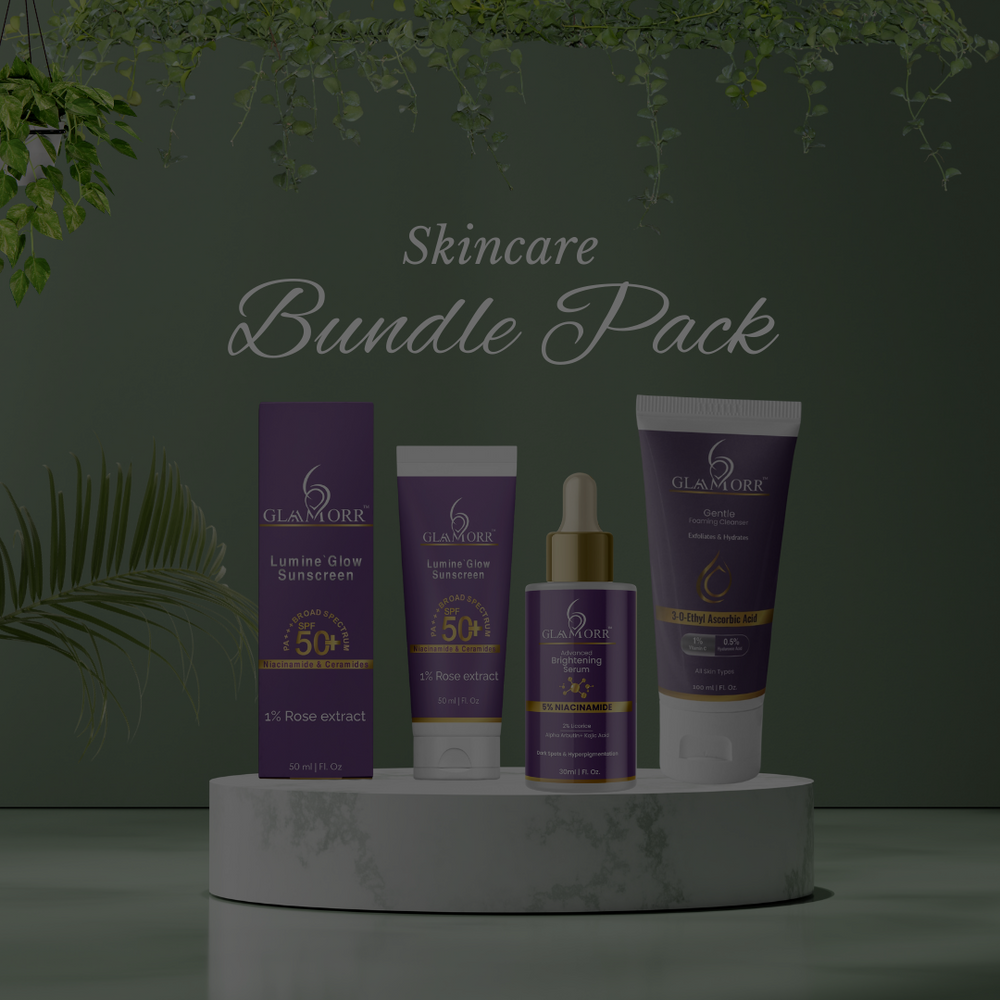
Cut through the noise with Glaamorr — formulated on science, not social media trends. Real ingredients at effective concentrations for real Indian skin.
Shop at glaamorr.com — Use GLAMM10 for 10% off