Skincare for South Indian Skin: A Regional Guide to Tone, Texture and Treatment

South Indian skin — spanning Tamil Nadu, Kerala, Andhra Pradesh, Telangana, and Karnataka — has specific characteristics shaped by both genetics and environment. Deeper skin tones, high UV exposure year-round, coastal humidity in many regions, and specific dietary and lifestyle patterns all influence what South Indian skin needs. Here’s a guide built for this region specifically.
South Indian Skin Characteristics
Higher melanin levels: South Indian skin typically falls in Fitzpatrick type IV–VI, with higher melanin concentration than North Indian skin on average. This provides more natural UV protection but also means greater susceptibility to post-inflammatory hyperpigmentation — any skin trauma leaves darker, longer-lasting marks.
Oil production: The tropical climate throughout most of South India means sebaceous glands are highly active. Oily skin is the norm rather than the exception, and this oiliness persists year-round unlike in North India where winters bring temporary respite.
Pigmentation patterns: Uneven skin tone, dark patches around the mouth and eyes, and post-acne marks are particularly common concerns for South Indian skin due to the combination of high melanin reactivity and year-round UV exposure.
What South Indian Skin Needs Most
Strong brightening actives: Niacinamide at 5%, Alpha Arbutin, and Kojic Acid at effective concentrations. South Indian skin’s higher melanin reactivity means brightening ingredients need to be present at meaningful levels to make a visible difference.
Year-round SPF 50 PA+++: With no true winter in most of South India, sun protection is a 365-day requirement without any seasonal break.
Lightweight, oil-controlling formulas: Heavy creams and occlusive products cause breakouts in South India’s tropical conditions. Every product in the routine needs to be lightweight and non-comedogenic.
Dietary Factors Specific to South India
South Indian cuisine — with its rice base, tamarind, spices, and coconut — is generally skin-friendly. Fermented foods like idli and dosa batter support gut health which influences skin. Coconut oil, widely used in South Indian cooking, is fine consumed but comedogenic on skin — avoid applying it directly to the face if you’re acne-prone.
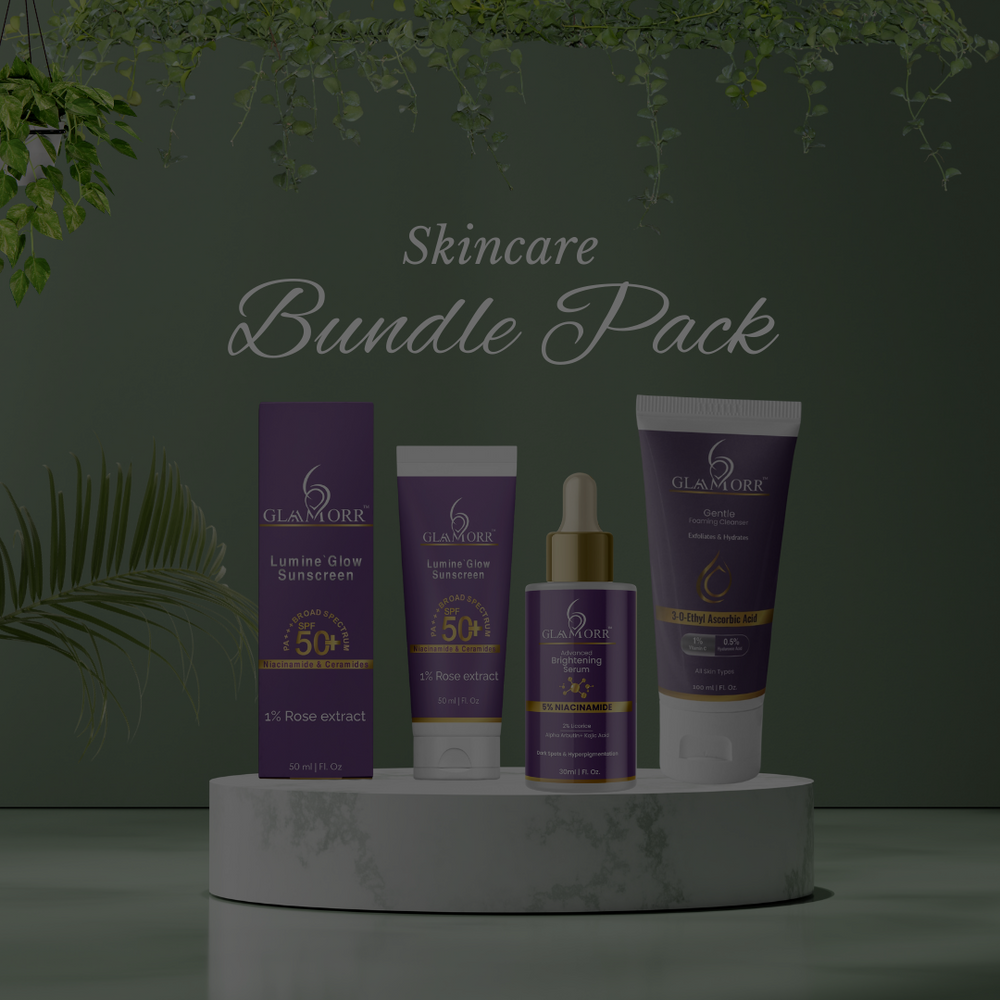
Glaamorr is formulated for Indian skin in Indian conditions — with the brightening actives and lightweight textures that South Indian skin specifically needs.
Shop at glaamorr.com — Use GLAMM10 for 10% off